
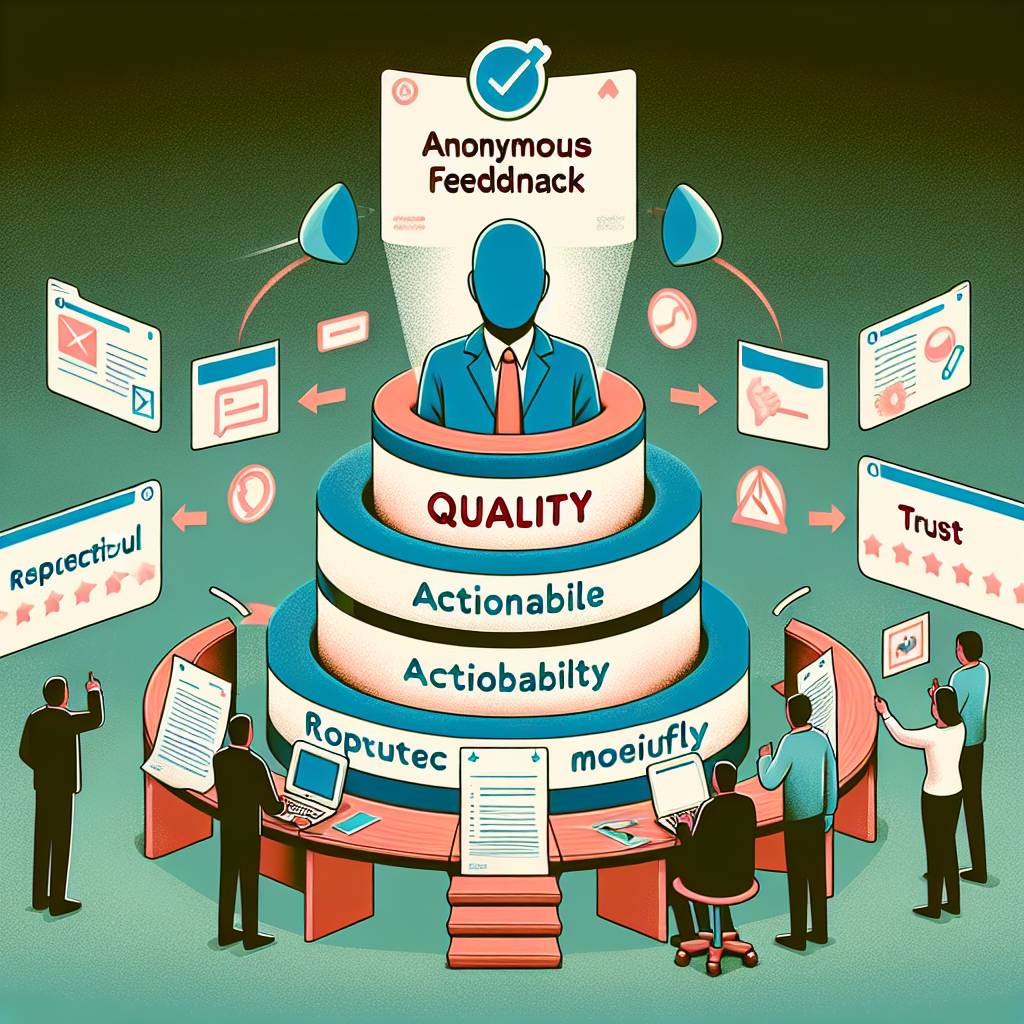
Anonymous feedback promises candid insights, but real-world deployment often hits roadblocks: low-quality responses, limited actionability, and eroded trust. These anonymous feedback obstacles—from hostile comments to vague suggestions—undermine the system’s value and slow adoption, especially when users doubt whether input leads to change.
Fixing these gaps requires more than toggling anonymity; it calls for thoughtful design, clear moderation rules, and mechanisms that improve the signal-to-noise ratio. By combining transparent processes, incentives for constructive contribution, and safeguards that balance privacy with accountability, organizations can make feedback both usable and credible. This introduction explains why quality, actionability, and trust must be addressed together to unlock meaningful adoption and lasting impact.
Strategic framing and core trade-offs
Can a suggestion box be both honest and useful? Framing anonymous input as a strategic tool—rather than a compliance checkbox—changes how teams weigh privacy, quality, and follow-through. This section maps the trade-offs leaders face and practical choices that preserve candidness while increasing usefulness.
Below is a concise orientation to the role anonymous feedback plays, the common obstacles that arise, and the measurable benefits organizations gain when they balance competing priorities thoughtfully.
The material that follows is organized into three parts: purpose and definitions, operational problems and context, and the upside when systems are designed well.
Intro: the role of anonymous feedback in improving teams and systems
Anonymous channels often surface issues that formal routes miss: interpersonal friction, leadership blind spots, and process breakdowns. When scoped correctly, these channels amplify under-heard voices and accelerate organizational learning by separating personal risk from problem reporting.
Definitions and scope
A short glossary clarifies terms so trade-offs remain tractable:
- Anonymous feedback obstacles: structural and behavioral barriers that reduce the usefulness of anonymous input.
- Quality: clarity, relevance, and accuracy of submissions.
- Actionability: whether a comment leads to a feasible change.
- Trust: belief that feedback is handled fairly and produces outcomes.
- Moderation: rules and processes for filtering and routing responses.
The next section unpacks common failure modes—why anonymity alone doesn’t guarantee constructive input and where moderation and adoption typically break down.
Problem / Context: common anonymous feedback obstacles, quality, actionability, trust, adoption, moderation
Failure modes cluster around three interrelated issues: low signal, poor follow-through, and managerial skepticism. Each reduces contributors’ willingness to participate and leaders’ incentive to act.
Low-quality submissions range from profanity and one-liners to unverified claims; these waste time and erode confidence. At the other extreme, overly cautious messages lack specifics and cannot be implemented, lowering actionability. Moderation that is either too lax or overly heavy-handed further undermines perceived fairness and depresses adoption.
“Psychological safety is not the absence of conflict; it is the presence of processes that convert conflict into learning.” — Amy C. Edmondson
To make trade-offs operational, apply a simple decision sequence:
- Define desired outcomes (safety, product improvement, compliance).
- Choose an anonymity level (fully anonymous, pseudonymous, or identified) per outcome.
- Set moderation rules tied to outcomes (e.g., immediate escalation for safety issues).
- Measure and iterate using the metrics below.
Quick do/don’t guidance for moderators and managers:
- Do: request specific examples and suggested fixes when possible.
- Don’t: ignore patterns of concern or let moderators unilaterally delete substantive reports.
Key metrics to track progress and align incentives include:
- Response rate: percent of invited participants who provide feedback.
- Actionable share: percent of submissions rated implementable within 90 days.
- Resolution time: average time from report to documented action.
- Moderation accuracy: false-positive/negative rates for abusive content filtering.
- Perceived fairness: survey indicator of trust in the process.
Next, we examine the concrete benefits that emerge when these trade-offs are handled deliberately.
Benefits: clearer signals, safer voices and better organizational learning
When organizations calibrate anonymity, moderation, and incentives, three outcomes become visible: higher-quality intelligence, broader participation from vulnerable groups, and faster institutional learning. Those outcomes reinforce one another—clearer signals make action easier, and visible action builds trust and future participation.
For example, separating triage from decision-making preserves submitter privacy while enabling accountable follow-up, which raises actionability and shortens resolution time. In service organizations, anonymous reports have improved safety reporting rates without revealing identities, underscoring that design choices matter as much as anonymity itself.
A strategic framing turns anonymous channels into instruments of continuous improvement rather than repositories of venting. With clear definitions, consistent moderation, and targeted metrics, leaders can reconcile privacy with accountability and unlock the value of candid input.
Implementation roadmap
This roadmap translates strategy into a practical sequence that can be applied this quarter. Each step targets common obstacles to quality, actionability, and trust so anonymous channels become dependable improvement engines.
First, the roadmap lists the core steps; each step then includes design tips, examples, and measurable controls.
Implementation steps — 6 practical actions to overcome anonymous feedback obstacles, quality, actionability, trust, adoption, moderation
Below are the six core activities and how success looks for each. Expect concrete tools such as form design, anonymity models, triage workflows, closing-the-loop routines, and adoption tactics.
Step 1 — Clarify goals, scope and success criteria for feedback programs
Start by naming the program’s purpose clearly: safety reporting, culture signals, product ideas, or compliance. Narrowing scope reduces scatter and improves actionability.
Define 2–4 success criteria (for example, increase actionable share to 30% within six months). Document ownership for follow-up and specify which outcomes require escalation. Clear expectations reduce managerial skepticism and align moderation to purpose.
Step 2 — Structure prompts and forms to boost clarity and actionability; reduce low-quality responses
Poor prompts invite venting; well-crafted forms steer respondents toward specifics. Use targeted fields such as “What happened?”, “When?”, “Who/where (optional)?”, and “Suggested fix”.
Add optional tags and a short checklist for veracity (evidence present? repeat occurrence?). A simple heuristic—shorter open text plus structured options—raises the signal-to-noise ratio without eliminating nuance.
Step 3 — Design anonymity and security guarantees to build trust while enabling follow-up
Describe technical and process-level protections in plain language: data retention, role-based access, and circumstances that permit re-identification (e.g., safety threats). Being transparent about anonymity’s limits builds credibility.
“Psychological safety depends on predictable processes that convert concern into change.” — Amy C. Edmondson
Offer graded anonymity options—fully anonymous, pseudonymous (replyable), or identified—mapped to program goals. That mapping clarifies trade-offs for contributors and moderators.
Step 4 — Create triage, tagging and moderation workflows so signals become usable
Define how items move from inbox to action. Lightweight triage reduces backlog and helps surface duplicates quickly.
Consistent processes improve speed and clarity; consider this numbered flow:
- Auto-tag by keyword and severity.
- Human triage within 48 hours for high-severity items.
- Assign an owner and set an expected response window.
- Record decisions and actions in a tracking log.
- Conduct periodic audits of moderation accuracy.
Combining automation with human review balances speed with context and improves both moderation accuracy and resolution time.
Step 5 — Close the loop: respond, prioritize actions and show impact to increase adoption and trust
Contributors stop participating when feedback disappears into a void. Commit to visible outcomes: acknowledgement, triage result, and public summaries of actions and timelines.
Quick guidance:
- Do: publish monthly summaries of themes and concrete fixes.
- Don’t: delete substantive reports without explanation.
Visible follow-through raises perceived fairness and encourages future participation.
Step 6 — Drive adoption through onboarding, champions and feedback literacy
Adoption depends on culture as much as technology. Train managers to interpret input constructively and appoint domain champions who model appropriate responses.
Provide brief onboarding that explains anonymity guarantees, offers examples of good reports, and shows how contributions lead to change. Peer champions help normalize participation and build trust.
Challenges & Mitigations: handling volume, abuse, bias and low signal while preserving anonymity
High volume, malicious submissions, and sampling bias are persistent challenges. Mitigations include rate limits, pattern-based abuse detection, stratified sampling to uncover bias, and regular moderation audits.
- Metric checklist:
- Response rate
- Actionable share
- Resolution time
- Moderation accuracy
- Perceived fairness
When combined, these steps create a pragmatic pathway: tune inputs, protect contributors, make signals operational, and demonstrate change—the cycle that converts anonymous channels into sustained organizational learning.
Measurement, patterns and next steps
Measuring an anonymous channel requires turning opaque inputs into clear patterns and repeatable learning. This section provides practical metrics, a reusable case-study template for scaling moderation, answers to common operational questions, and a compact 30/60/90-day playbook.
Measurement & Metrics: what to track — response rate, signal quality, actionability, resolution time and trust indicators
Monitor indicators that matter for improving quality, actionability, and trust. The guidance below includes a concise metric checklist, a short measurement process, and notes on interpreting trends.
Track three categories: participation, signal characteristics, and outcomes. Participation shows whether people use the channel; signal characteristics reveal whether submissions are usable; outcomes assess whether reports lead to change.
- Response rate: percent of invited users who submit within a campaign window — gauges adoption.
- Signal quality: percent of submissions meeting a minimal evidence checklist (specifics, timestamps, suggested fix).
- Actionability: percent of items judged implementable within 90 days.
- Resolution time: median time from receipt to documented decision or action.
- Trust indicators: periodic survey items on perceived fairness and whether feedback “leads to change.”
Routine measurement and learning process:
- Collect submissions and auto-tag by theme and severity.
- Sample and rate for signal quality weekly.
- Track assignment and measure resolution time per owner.
- Publish aggregated outcomes and update trust indicators monthly.
Export a focused metric set to dashboards: Response rate, Actionable share, median resolution time, moderation accuracy (false positives/negatives), and perceived fairness score.
Example / Case pattern: anonymized case study template for scaling moderation and demonstrating impact
A concise, repeatable case pattern helps stakeholders see how reports connect to decisions and measurable outcomes. Use anonymized examples to scale moderation without compromising anonymity guarantees.
Template components:
- Context: program name, period, participant base size.
- Input summary: volume, top themes, actionable share percentage.
- Moderation pattern: triage rules applied, automation vs. human review ratio.
- Actions taken: owners assigned, changes implemented, timelines.
- Impact: resolution time improvement, change in perceived fairness, lessons learned.
Use anonymized quotations and metrics to illustrate impact. For instance, a two-day human triage can reduce resolution time substantially and raise the actionable share over a quarter.
FAQs
Quick answers to recurring operational questions about anonymous feedback systems.
FAQ 1 — Can anonymous feedback be both safe and actionable?
Yes. Predictable processes and clear escalation rules create safety; structured prompts and follow-up loops produce actionability. Together they preserve privacy while delivering usable intelligence. Graded anonymity (fully anonymous, pseudonymous, identified) mapped to outcomes lets reporters choose the right balance.
FAQ 2 — How do we prevent abuse without undermining anonymity?
Use automated abuse filters alongside pattern detection and human review. Rate limits, keyword signals, and duplicate detection reduce volume-based abuse; human moderators handle edge cases to avoid wrongful removals. Publishing moderation criteria helps sustain trust.
FAQ 3 — What moderation models balance speed and fairness?
Hybrid models work best: automation for clear-cut abuse and human triage for ambiguous or high-severity items. Define SLA tiers (for example, 48-hour human review for red flags) and audit moderation decisions regularly to measure accuracy and bias.
FAQ 4 — How quickly should leadership act on anonymous reports to sustain adoption and trust?
Acknowledgement matters: aim to acknowledge within 48 hours and provide a progress update within 14 days for non-critical items. Rapid, visible action on some reports builds momentum, while a transparent monthly summary preserves perceived fairness when immediate fixes aren’t possible.
Summary with actionable next steps and a 30/60/90-day checklist
Turn anonymous noise into strategic signals by focusing on a small set of metrics, sharing case patterns each quarter, and aligning moderation with program goals. The checklist below helps teams get started quickly.
- Do: collect baseline metrics, implement structured prompts, publish monthly outcome summaries.
- Don’t: conflate anonymity with lawlessness or delay acknowledgement.
30/60/90-day checklist:
- 30 days: Define success criteria, implement forms with evidence prompts, set triage SLAs, begin baseline metric collection.
- 60 days: Deploy hybrid moderation rules, run the first moderation audit, publish an anonymized case template and a monthly summary.
- 90 days: Review metrics (actionable share, resolution time, perceived fairness), iterate prompts, appoint champions, and present outcomes to leadership.
“Processes that convert concern into change are the foundation of psychological safety.” — Amy C. Edmondson
Turning anonymous input into actionable trust
Treat anonymous feedback systems as deliberate programs rather than passive suggestion boxes. Align anonymity choices with goals, design forms that surface specifics, and pair automation with humane moderation so signals become usable.
Prioritize quality, actionability, and trust together: small, visible wins—acknowledgements, transparent triage, and periodic summaries—convert one-off reports into sustained participation and learning.
With clear processes, measured learning, and consistent follow-through, anonymous channels can turn candid input into concrete improvement and lasting trust.
Bibliography
The source below provides foundational context on psychological safety and organizational learning:
Edmondson, Amy C. The Fearless Organization: Creating Psychological Safety in the Workplace for Learning, Innovation, and Growth. San Francisco: Jossey-Bass, 2018. https://www.wiley.com/en-us/The+Fearless+Organization%3A+Creating+Psychological+Safety+in+the+Workplace+for+Learning%2C+Innovation%2C+and+Growth-p-9781119477242